
The video assistant referee causes controversy every week, whether it be the Premier League, Champions League or FA Cup, but now we have a 104-game FIFA men's World Cup to cover, so how are the decisions made this summer and are they correct?
For the tournament, we are taking a look at the major incidents to examine and explain the process in terms of both VAR protocol and the laws of the game.
All photo credit: FOX
 Andy Davies (@andydaviesref) is a former Select Group referee, with over 12 seasons on the elite list, working across the Premier League and Championship. With extensive experience at the elite level, he has operated within the VAR space in the Premier League and offers a unique insight into the processes, rationale and protocols that are delivered on a World Cup matchday.
July 19
Spain vs. Argentina
Referee: Slavko Vincic
VAR: Bastian Dankert
Time: 93 minutes
Incident: Argentina's Enzo Fernández was sent off for a second yellow card.
What happened: Having only just received a yellow card for dissent shown towards the referee, Fernández then flew into a late, reckless challenge on Spain's Pau Cubarsí and was sent off for a second yellow card.
VAR review and decision: New laws allow VAR to judge on second yellow cards given on field and can intervene if they believe the referee has made a clear error in giving the second yellow. The review in this situation was very quick, with VAR clearing the on-field decision as a correct sending off.
Another look at the challenge from Enzo Fernández that resulted in his second yellow card and subsequent sending-off. pic.twitter.com/6TAclFhmDY
— FOX Sports (@FOXSports) July 19, 2026
Verdict: This was as clear a second yellow as you are likely to see. Enzo Fernández makes an incredibly poor decision when he decided to launch into a challenge on Cubarsí. He was late, made no contact on the ball and showed a complete disregard for the safety of his opponent by his reckless action.
Despite his animated protests and gesticulations, Fernández can have no complaints given the decisions he made. The first yellow card was a clear act of dissent towards the referee and he deserved his booking. In a World Cup final, he should've been smarter, and ultimately he put his feckless Argentina side further imperil with his actions.
Time: 6th minute of extra time
Incident: Spain's Nico Williams had a goal disallowed for a foul in the build-up.
What happened: Nico Williams neatly finished as the ball ran loose following Mikel Merino's smart play. However, referee Slavko Vincic quickly blew his whistle to disallow goal as he felt Merino fouled Argentina's Nicolás Otamendi in the build-up when he trod the defenders foot.
VAR decision: VAR checked and cleared the on-field decision to disallow the goal for a foul in the build-up.
A look at the foul on Mikel Merino as Spain thought they had the go-ahead goal pic.twitter.com/maUaljFP0D
— FOX Sports (@FOXSports) July 19, 2026
VAR review: The on-field decision is always the starting point in any review, and only a clear incorrect decision can trigger an on-field review from the VAR.
The referee described over the comms that he disallowed the goal for foot-on-foot contact in by Merino on Otamendi, and with the replays showing exactly this action, it was a straightforward process for VAR to check and clear the decision as correct.
Verdict: This will be considered a "soft" decision, and I have to say I totally agree. I don't believe the foot-on-foot contact by Merino warranted a foul and the impact on Otamendi in real-time was minimal if any. In my opinion, the referee was drawn in by the reaction of Otamendi as he exaggerated any contact to the extreme.
VAR was never going to intervene, however, as there was clear contact by Merino on the foot of Otamendi and therefore no clear error was made by the referee.
July 11
Argentina vs. Switzerland
Referee: João Pedro Silva Pinheiro
VAR: Guillermo Pacheco Larios
Time: 72 minutes
Incident: Switzerland striker Breel Embolo sent off after receiving a second yellow card for simulation.
What happened: Argentina's Leandro Paredes was given a yellow card for what seemed like a late challenge on Embolo. However, after a VAR review the referee rescinded the card given to Paredes and gave a yellow card to Embolo for simulation instead. Embolo was already on a yellow card, so he was sent off.
This was the new "mistaken identity" law in action, where VAR can recommend a player from the opposite team be cautioned in a specific incident with evidence that a clear error has been made.
After a VAR review, Embolo is sent off with his second yellow for simulation 🟥 pic.twitter.com/1ljSIAtVRj
— FOX Sports (@FOXSports) July 12, 2026
VAR review: Whilst VAR cannot recommend a player is yellow carded in normal circumstances, when there is clear video evidence that the referee has yellow carded the wrong player from the wrong team in a specific incident, an on-field review is recommended so the decision can be reversed.
Video evidence of simulation by Embolo in this situation is clear, and once at the screen, the referee agreed with the VAR judgement and sent Embolo off for his second caution.
Verdict: Embolo has only himself to blame as this was a clear attempt to deceive the referee into yellow carding an Argentina player.
There has been precedent set in this World Cup in how this new law is interpreted and applied, as we saw a similar situation in the United States vs. Paraguay match. In that incident, Tim Ream had a yellow card rescinded and passed to Paraguay attacker Miguel Almirón who was deemed to have dived when challenged by the USMNT skipper.
In this situation however, Embolo suffered the greatest consequence as he was already on a yellow card, and a red card was the inevitable outcome.
There was some debate after the U.S. game as to whether the new law was applied correctly given wording in law states the offence itself cannot be reviewed, only the removal of the card from one player to another for the original offence penalized.
However, FIFA was happy how the interpretation landed publicly in the U.S. vs. Paraguay match as it was felt that a wrong decision was corrected. It will be interesting to hear some clarification from FIFA on this incident and if its referees have been instructed to be consistent with that interpretation going forward, because it allows VAR to get involved in areas where it otherwise wouldn't.
July 7
Argentina vs. Egypt
Referee: François Letexier
VAR: Jerome Brisard
Time: 62 minutes
Incident: Egypt goal disallowed from a VAR overturn.
What happened: Egypt attacker Mostafa Ziko thought he had scored an incredible World Cup goal to put his team up 2-0 against Argentina. However, following a VAR intervention, the goal was disallowed for a foul in the buildup by Egypt defender Marwan Attia on Argentina defender Lisandro Martínez.
After VAR review, Egypt's goal is disallowed due to a foul in the offensive build up pic.twitter.com/WB7WgVGpQL
— FOX Sports (@FOXSports) July 7, 2026
VAR decision: VAR Overturn. A foul in the build up to the goal being scored.
VAR review: The VAR was quick in recommending an on-field review for a possible foul by Attia prior to the goal being scored. The VAR was uncomfortable with the action by the Egypt player, as he both held on to Martinez's shirt and stood on the Argentine's foot simultaneously. Once at the screen, the referee agreed with the VAR's judgement and disallowed the goal.
Verdict: A correct intervention by the VAR, and disallowing this goal was the right outcome.
The clear foul by Egypt's Attia had a direct impact on their ability to break away and score, leaving Argentina disadvantaged while in an attacking position.
The incident occurred high up the pitch and might cause some debate. However, when a foul of this nature occurs in the same phase and directly results in a goal, it must be disallowed. Once the referee was shown the pictures of a simultaneous shirt-hold and step on the foot, there was no chance he would stick with his original decision.
Incidents: Egypt appealed for two separate fouls late in this match, with one occurring in the leadup to Argentina scoring in the second minute of second-half stoppage time. Both occurred in the Argentina penalty area, and both were checked and cleared by VAR.
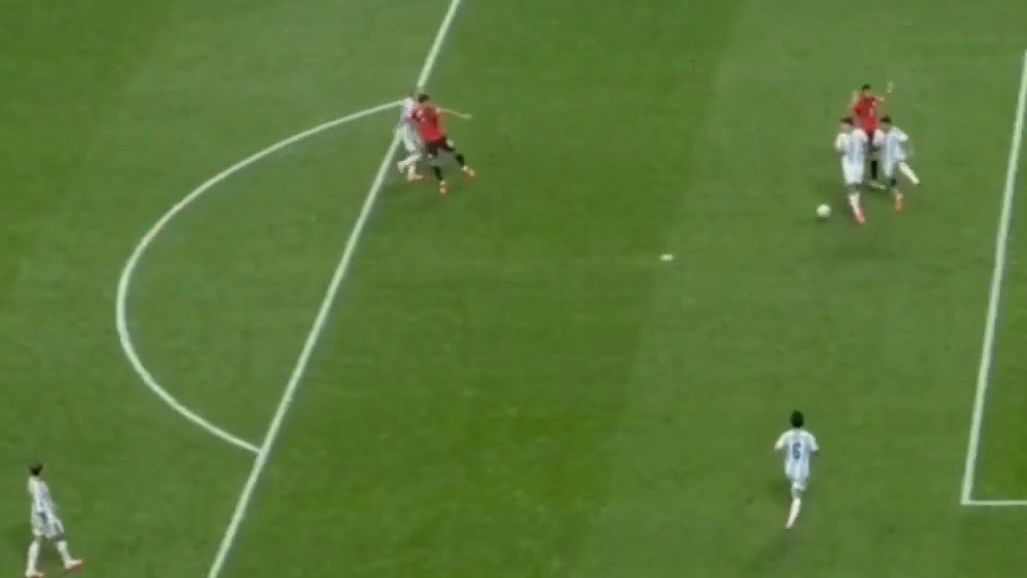
What happened: Argentina's Alexis Mac Allister appeared to grab Egypt's Hamdy Fathy in the penalty area, with the Egyptian falling to the ground following the contact. However, no decision was given by the referee.
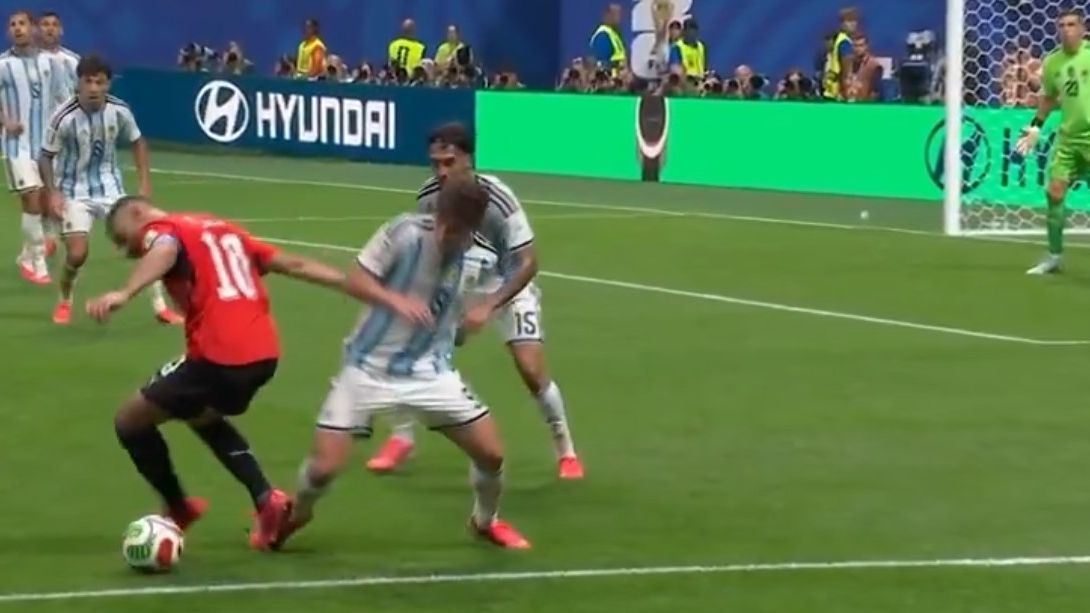
Additionally, in the closing minutes of the match, Egypt's Mohamed Salah claimed he had been tripped by Argentina's Julián Álvarez as Salah attacked the Argentina penalty box. Once again, the referee did not feel the action by Álvarez met the threshold for foul contact.
VAR review: This was a challenging match for the VAR, with the initial Mac Allister incident, considering where it occurred on the pitch, precenting a unique situation of a double-consequence outcome -- any positive intervention would result in a review for both the Argentina goal to be potentially disallowed, and then a penalty to be awarded at the opposite end of the pitch as it occurred in the same phase of play.
The VAR was comfortable that neither incident met the threshold for an intervention given the relative actions of the defending Argentina players.
Verdict: In a difficult end to the match for both the referee and VAR, I am comfortable they were correct in both situations.
Mac Allister took a big risk when he grabbed Fathy's shirt off the ball. However, it was minimal, not sustained, and did not have a material impact on the attacker's ability to gain possession of the ball. This, in my opinion, did not meet the threshold for an impactful foul hold and a penalty kick.
Equally, the decision not to award Salah a penalty was a correct one. Salah tried to win a penalty as opposed to it being a foul challenge from Álvarez. In these situations, you are looking for a clear action by the opponent, and the dynamic of this contact was boot against boot, with Salah going to ground unnecessarily.
There will be comparisons with the foul that was awarded in the buildup to the Egypt goal. However, the key difference is that the earlier incident involved a defender's boot on an attacker's. The Salah incident, looked at in detail, is boot against boot, with both players' momentum creating the contact.
July 4
France vs. Paraguay
Referee: lgiz Tantashev
VAR: Juan Lara
Time: 65 minutes
Incident: VAR intervention and penalty awarded to France
What happened: As France's Désiré Doué attacked the Paraguayan penalty area, midfielder Diego Gómez seemed to trip the French player without playing the ball. The referee waved away the appeals and played on.
The Paraguay players were adamant Doué had dived and demanded a yellow card for the French attacker.
A look at the challenge that resulted in a French penalty and Mbappé scoring 🇫🇷 pic.twitter.com/FWYu5LeFbk
— FOX Sports (@FOXSports) July 4, 2026
VAR decision: VAR recommended an on-field review for a possible penalty to France.
VAR review: VAR didn't need too long to review the replays, which showed, in his opinion, a clear and obvious error had been made on field by the referee. The replays showed a clear trip by the defender on the attacker and VAR asked the referee to have a second look at the incident on the pitch side monitor.
Once at the screen, the referee quickly agreed with the VAR judgement and awarded a penalty kick.
Verdict: This was a positive and correct intervention by VAR as this was a clear foul and a penalty was absolutely the correct outcome.
This was a lazy and unnecessary challenge by Gómez, and with Doué moving at such speed, he was never going to win the ball and a trip was inevitable. When a defender dangles a leg in this type of situation, often it results in a penalty.
The Paraguay players' reaction, demanding that a yellow card should be given to Doué for diving, was a clear attempt to deflect and add some doubt to the review process.
This was a clear penalty in real time and how the referee did not recognise this is difficult to understand. That said, the referee had a poor game, missing so much and in doing so he made it a very difficult for himself.
Ultimately, though, the process worked, the correct call was made and, in the end, the penalty awarded to France ended up being the deciding goal in France's 1-0 win over Paraguay.
July 3
Portugal vs. Croatia
Referee: Espen Eskas
VAR: Jarred Gillett
Time: 103 minutes
Incident: Croatia goal disallowed due to offside.
What happened: With the score at 2-1 to Portugal, Croatia defender Joško Gvardiol bundled home an equalizer deep into stoppage time. However, a check on the "Connected Ball Technology" confirmed that Croatia striker Igor Matanović got a faint touch on the ball, which played Mario Pašalić offside.
Immediately after the ball touched Matanović, it deflected off Portugal defender Renato Veiga's head. So why wasn't the phase reset?
VAR review: The VAR checked the touch by Matanović using the ball technology, then determined that Veiga's touch on the ball wasn't deliberate and cleared the offside.
Verdict: The check itself was simple enough, as there was a spike on the graph to show that Matanović touched the ball. And that has already happened during this World Cup in Sweden vs. Tunisia.
Usually when the ball touches an opponent, as it did with Veiga, the offside phase is reset. That would have meant Gvardiol's goal would have stood. However, under Law 11, a player must deliberately play the ball to reset the offside phase, so because it deflected unintentionally off Veiga's head, it did not count as a deliberate play and Gvardiol was ruled offside.
July 1
Belgium vs. Senegal
Referee: Saíd Martínez
VAR: Guillermo Pacheco Larios
Time: 118 minutes
Incident: Penalty awarded to Belgium after a VAR review.
What happened: Belgium's Youri Tielemans attacked a cross into the Senegal and ended up on the ground after a challenge by Senegal's Lamine Camara. The referee did not react in real time and ignored the Belgium penalty appeals.
VAR decision: The VAR recommended an on-field review for a possible penalty kick.
PENALTY AWARDED TO BELGIUM LATE IN EXTRA TIME 😱 pic.twitter.com/8F8WToJ4zZ
— FOX Sports (@FOXSports) July 1, 2026
VAR review: The VAR took his time to decide that Camara kicked the Belgium midfielder without playing any of the ball, eventually recommending the referee watch the replays on the pitchside monitor for a possible penalty to Belgium.
Following a lengthy visit to the pitchside screen, the referee agreed that a foul had been committed and awarded a penalty to Belgium. The entire review process took over seven minutes.
Verdict: This will feel extremely harsh on Senegal, as the contact by Camara to the back of Tielemans' calf seemed negligible, and it was. However, as a defender, when you challenge in this type of situation, don't play the ball and kick the back of the attacker's leg, you run the risk of being penalized for a foul.
Once the referee was at the screen, it was difficult for him to not award a penalty given the pictures he was presented from the VAR showing clear contact from a defender on an attacker without playing the ball. That said, given the high bar set at this tournament for VAR intervention, it's a decision that could have gone either way.
United States vs. Bosnia-Herzegovina
Referee: Raphael Claus
VAR: Juan Ernesto Soto Arévalo
Time: 63 minutes
Incident: VAR overturn. Red card given to USMNT forward Folarin Balogun for serious foul play (SFP).
What happened: U.S. goal scorer Balogun was sent off following a VAR check after what seemed like innocuous contact with Bosnia defender Tarik Muharemovic.
VAR decision: VAR recommended an on-field review for a possible red card for SFP.
More angles of the red card shown to Balogun and the US 🟥 pic.twitter.com/Rh4zjoJTHI
— FOX Sports (@FOXSports) July 2, 2026
FOLARIN BALOGUN SEES RED FOR SERIOUS FOUL PLAY 🟥
— Golazo America (@GolazoAmerica) July 2, 2026
He will miss the USMNT's next match if they were to advance 🫠 pic.twitter.com/53yiGdM5TH
VAR review: VAR was uncomfortable with the replays that showed the Bosnian defender's right ankle buckle under contact from Balogun when both players were challenging for the ball. VAR believed Balogun was dangerous in his play and recommended the referee visit the pitchside monitor to review for a possible red card.
Verdict: Balogun can feel unfortunate to be red carded in this situation as, in my opinion, this was not a red card offense. With both players challenging for ball, the contact from Balogun on Muharemovic, while it looked bad in slow motion, was purely accidental and an unfortunate result from two players challenging for possession of the ball in a normal football movement.
VAR made their recommendation to the referee based on slow-motion and still replays, which is not aligned with VAR protocols, as these should be used for only point-of-contact purposes in a red card tackle situation. Once at the screen, however, it would have been a surprise if the referee did not send off Balogun considering the pictures he was presented by VAR.
England vs. Congo DR
Referee: Adham Mohammad Tumah Makhadmeh
VAR: Khamis Al Marri
Time: 43 minutes
Incident: Possible penalty to England
What happened: England striker Harry Kane was put through on goal, rounded the keeper and appeared to be tripped as Congo DR goalkeeper Lionel Mpasi slid out to challenge. The referee waved away the penalty appeals.
VAR decision: VAR checked and cleared the on-field decision of no penalty.
Another look at England's play in the box with Harry Kane where no penalty was called pic.twitter.com/FrXIBdg9tz
— FOX Sports (@FOXSports) July 1, 2026
VAR review: The on-field decision is always the starting point for any VAR review, and only if there is clear video evidence on the replays that an obvious error has been made will the VAR recommend a review.
In this incident, the VAR clearly felt there was enough doubt that any contact by the keeper was not the key factor in Kane going to ground, and therefore did not intervene.
Verdict: I have no doubt this should have been a penalty, and England should feel unfortunate.
When an attacker shifts the ball wide of a keeper while moving at pace, the responsibility is on the keeper to either win the ball or avoid contact with the attacker. Mpasi failed on both fronts and slid into Kane, making no contact on the ball.
The non-intervention, however, did not surprise me. The VAR amazingly checked this challenge in slow motion, which was odd, as this would have put a level of doubt in the VAR's mind that Kane tried to win a penalty as opposed to the incident being a foul by the keeper.
These situations need to be reviewed at real speed, and the fact it wasn't has certainly cost England a spot kick.
June 29
Germany vs. Paraguay
Referee: Jalal Jayed
VAR: Tatiana Guzman
Time: 105 minutes
Incident: VAR overturn. Germany goal disallowed for a foul on Paraguay goalkeeper Orlando Gill.
What happened: Germany thought they had scored when a corner by Nathaniel Brown was headed in by Jonathan Tah in the first period of extra time. However, the goal was disallowed by the referee following an OFR (on-field review) recommended by the VAR.
VAR decision: The VAR recommended an OFR (on-field review) for a possible block foul on Gill before the goal was scored.
A closer look at the foul that negated Germany's goal in extra time pic.twitter.com/JsUdxf36EQ
— FOX Sports (@FOXSports) June 29, 2026
VAR review: The VAR felt there was a clear foul block by Germany's Waldermar Anton on the keeper, impacting the keeper's ability to save the ball from entering the goal. She recommended the referee watch the replays and disallow the goal. The referee agreed with the VAR's judgment of the incident and disallowed the German goal.
Verdict: This was not a foul block by Germany's Anton, and this goal should have stood. It was both a poor intervention by the VAR and an equally disappointing decision from the on-field referee to overturn his original decision and disallow the goal. Germany defender Anton was entitled to hold his ground in this situation, and it was in fact the Paraguay keeper who turned into the German, going to ground once he felt contact as opposed to any foul action by Anton. This was a poor process and outcome delivered by the match officials.
June 28
South Africa vs. Canada
Referee: João Pedro Silva Pinheiro
VAR: Carlos del Cerro Grande
Time: 45+1 minutes
Incident: Possible penalty to Canada.
What happened: Richie Laryea surged into the penalty area down the left flank in first-half injury time, only to be seemingly fouled by South Africa defender Khuliso Mudau.
Verdict: This should have been a penalty kick to Canada, in my opinion, except the appeal was waved away by the penalty and any VAR discussion did not result in an OFR (on-field review).
Mudau made a challenge on Laryea from behind, initially connecting with the trailing left leg of the Canada full back, followed by a tangling of both players legs as they fell to the ground. This was a clumsy challenge by Madau, and the minutest touch on the ball was to me irrelevant given the nature of the challenge.
June 27
Colombia vs. Portugal
Referee: Alireza Faghani
VAR: Jerome Brisard
Time: 90 minutes
Incident: Goal disallowed for offside.
What happened: Colombia thought they had scored a late winning goal to top Group K, however Davinson Sanchez's headed goal was flagged offside by the assistant referee.
VAR review: Regardless of the on-field decision of the assistant referee, all goals are checked in these circumstances. This was a factual review from VAR where the semi-automated technology does the heavy lifting, and it recommended the decision of offside. The digital image showed the front of the right boot of Sancheź was over the line. Just.
Verdict: I absolutely understand why football fans get so frustrated with "toenail" offside calls, however until the offside law is amended, these types of outcomes will continue to be an area of debate.
Unlike the Premier League, which use thicker lines with a 5cm tolerance, to register if a player is in an offside position, FIFA uses the technology without a zone of tolerance. And that will always produce tight calls such as this.
You would find it difficult to find a true fan who thinks this goal should have been disallowed, but until the law changes it will continue to be the case.
Congo DR vs. Uzbekistan
Referee: Felix Zwayer
VAR: Bastian Dankert
Time: 18 mins
Incident: VAR Overturn. Goal disallowed for a foul in the buildup.
What happened: Congo DR's Nathanaël Mbuku found the net in the 18th minute, but the goal was disallowed following a VAR review when it was adjudged that the Congo DR attacker had fouled Uzbekistan's Sherzod Nasrullaev by catching with his hand prior to him scoring.
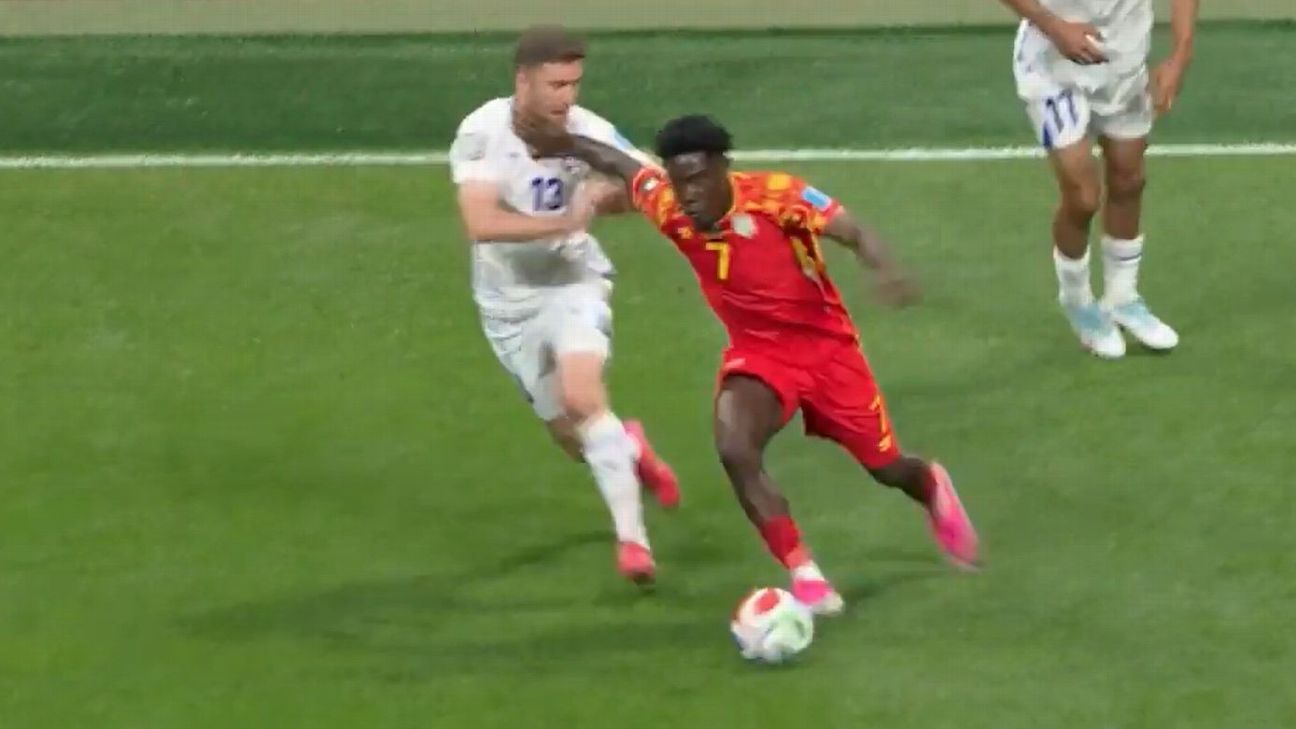
VAR review: In the opinion of the VAR, the contact by Mbuku's right hand into the face of Nasrullaev met the threshold for a foul challenge.
Additional considerations for the VAR in these situations, aside from identifying foul contact, is to decide in his opinion if a clear foul been misread or completely missed by the on-field refereeing team. And also if the contact had a direct impact on the goal being scored.
VAR was comfortable that the criteria was met for an intervention and recommended an on-field review to the referee. Once at the screen, the referee agreed with his VAR and disallowed the goal.
Verdict: This was a poor intervention from VAR, and the original on-field decision of a goal should have been the outcome.
While there was a hand by Mbuku that caught the face of his opponent, this was a subjective call as to whether it was a foul. Equally, the contact had no direct impact on the subsequent goal being scored as Mbuku was clearly pulling away from his opponent with the defender having little opportunity to challenge for the ball.
VAR should not have interfered and the goal should have been allowed to stand. But, once at the screen, it was very difficult for the referee to stick to his original decision considering the pictures he was presented with.
Egypt vs. Iran
Referee: Szymon Marciniak
VAR: Tomasz Kwiatkowski
Time: 90+3 minutes
Incident: VAR Overturn. Iran goal disallowed for offside.
What happened: Iran thought they had scored a late winner that would have seen them finish second, but Shoja Khalilzadeh's effort was ruled out for offside by VAR. However, with an Egypt defender very clearly goal side of the Iranian player, was it correct?
VAR review: This was a straightforward check and intervention for the VAR team as the graphics clearly showed that Khalilzadeh's foot was in an offside position when the ball was played. And the VAR team ignored the defender at the top of the screen who was goal side of Khalilzadeh when the ball was played by his opponent. Why? See below.
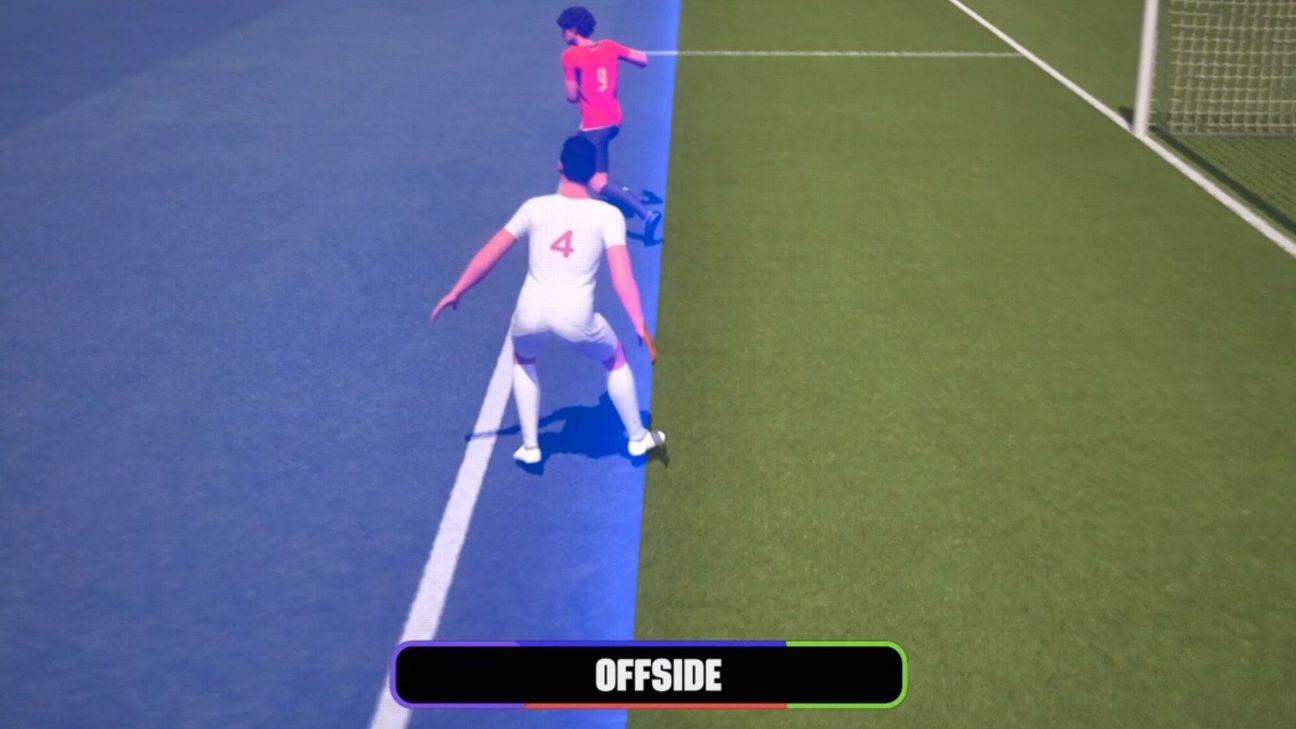
Verdict: This was a correct factual intervention by VAR. In law, there needs to be two defenders between an attacker and the goal line when the ball is played for it not to be offside.
In most cases you would expect this to be one defender and the goalkeeper ... however, this is not always the case and it can be two outfield defenders if the goalkeeper advances up the pitch.
In this situation, and unfortunately for Iran, the keeper had advanced too far forward. That left only one defender between the attacker and the goal, which means it was an offside offense, and the goal was correctly disallowed.
June 25
Ecuador vs. Germany
Referee: Tori Penso
VAR: Joe Dickerson
Time: Three minutes
Incident: Possible foul in build up to Leroy Sané's opening goal for Germany.
What happened: Germany's midfielder Aleksander Pavlovic played the ball with a high boot, seemingly catching Ecuador midfielder Pedro Vite's head as he did so. Pavlovic managed to keep the ball and, within two passes, Sané took a shot and scored, putting Germany 1-0 up inside three minutes.
No foul called on Germany here on the play that led to a goal pic.twitter.com/wVhEaNZNfc
— FOX Sports (@FOXSports) June 25, 2026
VAR decision: Referee Tori Penso allowed the goal on the field. VAR checked and cleared the decision.
Verdict: The remit of VAR is to clear the on-field decision unless there is video evidence to show that an obvious error has been made on-field. On reviewing the replays, VAR was comfortable that any contact by Pavlovic did not meet threshold of foul contact and was happy to clear the goal as a good one.
This, however, was a poor decision by both the on-field referee and VAR. It was a clear example of dangerous play. The high boot from Pavlovic should have been a red flag to the referee in real time, and the subsequent contact was clear. But the non-intervention by VAR once the replays had been reviewed was wrong, even with FIFA encouraging a high threshold for intervention.
All high boot contact on the head of an opponent should be penalized, and it is difficult to understand how this goal stood and was not pushed through the on-field review process.
June 23
England vs. Ghana
Referee: Saíd Martínez
VAR: Armando Villarreal
Time: 67 minutes
Incident: Possible DOGSO red card for Jordan Pickford
What happened: Prince Adu and England goalkeeper Pickford collided after the Ghana attacker was put through on goal. The referee awarded a free kick to England.
Prince Adu and Jordan Pickford collide on this play pic.twitter.com/sMaXIfXLxE
— FOX Soccer (@FOXSoccer) June 23, 2026
VAR review: The coming together of Adu and Pickford, and the subsequent call of a foul by Adu, was not viewed as a clear on-field error and therefore did not meet the threshold of an on-field review.
Verdict: Given the Ghana attacker Adu failed to get a final touch on the loose ball and both players ended up colliding, I was not surprised that a defensive free kick was awarded as this was the safest and most understandable outcome for the on-field referee. An attacking free kick would have meant that Pickford would have been sent off for DOGSO, and this incident did not require a red card outcome.
Pickford, however, can think himself very fortunate as any final touch on the ball by Adu before the collision would have correctly resulted in a red card for the England keeper.
A CHAOTIC chance for Ghana to take the lead late! 🤯 pic.twitter.com/07IcoYx4DC
— FOX Soccer (@FOXSoccer) June 23, 2026
Time: 79 minutes
Incident: Possible penalty for Ghana
What happened: Adu was once again through on goal when he was seemingly brought down in the penalty box by England defender Ezri Konsa.
VAR review: The VAR did not intervene as it was not viewed as a clear on-field error and therefore did not meet the threshold of an on-field review.
Verdict: It was a poor decision by Konsa to challenge in this careless manner, and he is very fortunate the on-field referee did not feel it met the threshold for a foul challenge -- I thought it was a foul.
When you jump into a challenge as the England defender did, you must win the ball otherwise you run a very high risk of giving away a penalty, and Konsa was lucky the contact wasn't greater. I was not surprised however, that it was checked and cleared by VAR as the dynamics of the challenge did not lend itself as a clear error against this tournament's high bar for VAR intervention.
The unusual nature of the challenge, with both players moving in the same direction and going to ground as opposed to definitive contact by Konsa tripping Adu, would have been the considerations and rationale for no involvement from VAR.
England, however, consider themselves very fortunate in both situations.
June 22
Argentina vs. Austria
Referee: Amin Mohamed Omar
VAR: Khamis Al Marri
Time: 38 minutes
Incident: Argentina goal, possible foul in the buildup
What happened: As Lionel Messi celebrated his record-breaking World Cup goal, Austria were left questioning a possible foul in the buildup by Argentina's Alexis Mac Allister on Xaver Schlager that directly led to Argentina scoring. The referee awarded the goal.
VAR decision: The VAR checked and cleared the on-field decision of goal as a correct one.
VAR review: The VAR checked the attacking phase prior to the goal being scored and was comfortable that no foul had occurred in the buildup. The coming together of Mac Allister and Schlager was not viewed as a clear on-field error and therefore did not meet the threshold of an on-field review.
Verdict: VAR was correct not to intervene with the contact between Mac Allister and Schlager, as it was debatable if it met the threshold for a foul. Schlager's feet were not set when contact occurred between the two players, with the Austrian's movement off the ground and momentum into Mac Allister correctly judged a partial source of the ultimate contact.
The bar for VAR intervention at this tournament is impressively high, and in this situation, once this appeal was waved away by the on-field refereeing team, the VAR would not be looking to intervene and recommend that a goal be disallowed unless there was clear evidence an error had been made. That was not the case here.
June 21
Iran vs. Belgium
Referee: Darío Herrera
VAR: Hernán Mastrángelo
Time: 25 minutes
Incident: Iran goal ruled out for offside after VAR check
What happened: Iran thought they had opened the scoring in the 25th minute when Mehdi Taremi scored after netting from a smartly worked free-kick routine -- which was reminiscent of Wout Weghorst's clever stoppage-time goal for Netherlands vs. Argentina at the 2022 FIFA World Cup -- only for his effort to be ruled out for offside following a review.
Mehdi Taremi found the back of the net for Iran, but the goal was disallowed after a VAR check determined it was offside pic.twitter.com/HebR7GY46j
— FOX Soccer (@FOXSoccer) June 21, 2026
VAR review: A lengthy review from VAR eventually identified that Taremi was marginally in an offside position when the free kick was played. As he was turned with his back to goal, it was his backside that was over the line.
Verdict: A correct decision by VAR to disallow the goal, however why it took the time it did with the technology available caused some debate after the match.
Ultimately it was a tight call even with technology, as the number of players involved made it more complicated. In such circumstances, a manual check also forms part of the review process. But the right call was made in the end.
Time: 66 minutes
Incident: Red card. Belgium defender Nathan Ngoy sent off for denial of a goal-scoring opportunity (DOGSO).
What happened: What looked like a routine pass back to Ngoy high up the pitch was miscontrolled by the young defender, who then dragged down Iran's Taremi as he was seemingly set to run through on goal. The referee sent Ngoy off for denial of a goal-scoring opportunity.
VAR review: A straightforward check and clear for VAR, as they felt all the criteria for a DOGSO were met.
Verdict: A correct on-field decision by the referee, which was cleared by VAR.
Once a defender miscontrols a ball in this area of the pitch, it triggers the refereeing team onto a possible DOGSO situation. The key component as to what happens next is to identify if and what type of foul action is committed by the defender. Simultaneously, the referee must take a snapshot of where the actual offense takes place and the dynamic position of other defenders/goalkeeper to be able to make the next decision.
The only potential debate in this situation was Taremi's distance to goal. However, the attacker's direction of play, likelihood of controlling the ball, no covering defenders and the deep position of the goalkeeper meant this met all the criteria for a DOGSO red card.
June 19
Paraguay vs. Türkiye
Referee: Ivan Barton
VAR: Khamis Al Marri
Time: 45+3 minutes
Incident: Red card for Paraguay's Miguel Almiron
What happened: After a foul on Paraguay striker Isidro Pitta triggered a heated multi-player confrontation, Paraguay's Almiron obscured his mouth with his hand while speaking to Türkiye's Mert Muldur, who told the referee immediately.
VAR review: A quick review saw Almiron sent off for breaking new IFAB rules.
Paraguay's Miguel Almirón is sent off with a red card 🟥 pic.twitter.com/adQyHF296s
— FOX Soccer (@FOXSoccer) June 20, 2026
Verdict: A simple one.
The rule -- which states "any player covering their mouth in a confrontational situation with an opponent may be sanctioned with a red card" -- was brought in to stop potential racist comments being hidden from view, after the recent incident involving Benfica winger Gianluca Prestianni and Real Madrid's Vinicius Junior in the UEFA Champions League.
A key point is that if the conversation is friendly, then players can do it, but Almiron was clearly considered to be confrontational.
This was a correct intervention by VAR and positive message sent to the soccer world that this action will no longer be tolerated. All players would have spent many meetings discussing the new laws pre-tournament, so why Almiron believed he would escape punishment when he covered his mouth in a confrontational situation is difficult to understand.
United States vs. Australia
Referee: Felix Zwayer
VAR: Bastian Dankert
Time: 43 minutes
Incident: Alex Freeman goal awarded after VAR review amid on-field offside decision
ALEX FREEMAN MAKES IT 2-0 AMERICA! 🇺🇸
— FOX Sports (@FOXSports) June 19, 2026
The goal is confirmed for the @USMNT after a VAR check! pic.twitter.com/jTGJxaXk52
What happened: USMNT's Sergiño Dest took a shot from the edge of the box, but his attempt was blocked and flew straight up into the air. When it came down, Freeman and Folarin Balogun were already racing to the ball, with Freeman getting their first and nodding it home. However, the linesman signaled for an offside.
VAR review: Replays showed Freeman was onside when Dest took his shot, and the referee allowed the goal to stand.
Verdict: This was the correct intervention for VAR to change the on-field decision. It was not a particularly difficult decision in real-time, and I was surprised that the flag went up in the first instance.
As for Balogun, it seemed the Australia bench believed that the striker impeded goalkeeper Patrick Beach, but that simply wasn't the case here.
There are two key ways an attacker would be considered to have impacted the GK:
They impact the line of vision, or are in a position where they impact the goalkeeper's ability to judge if the player, who is in an offside position, will become active and play the ball.
They physically impact or disrupt the goalkeeper's ability to do his job.
Balogun did neither in this situation, so there are no grounds to rule out the goal based on the striker's impact.
Another look at Alex Freeman's goal for the @USMNT pic.twitter.com/Dg71zHbGox
— FOX Sports (@FOXSports) June 19, 2026
June 18: Canada vs. Qatar
Referee: Cristian Garay
VAR: Juan Lara
Time: 33 minutes
Incident: VAR overturn; penalty changed to free kick and Qatar player sent off on review.
What happened: Qatar defender Homam El Amin was sent off for denial of an obvious goal scoring opportunity (DOGSO) when he tripped Canada's Tajon Buchanan following a VAR intervention. The referee had originally awarded a penalty to Canada and a yellow card to El Amin, but VAR recommended that the original decision be changed to a free kick outside the area and a red card to El Amin.
VAR review: This process was straightforward for the VAR; the trip by El Amin on Buchanan clearly happened outside the penalty area. The obvious advantage for the VAR is the ability to freeze frame the replays to determine the point of contact -- a decision far more difficult for the referee in real-time.
Verdict: It was an understandable decision on the field by the referee to award a penalty and a yellow card, as contact was very close to the area. Additionally, with Buchanan falling into the penalty area and everything happening at speed, this would have looked and felt like a penalty in real-time.
VAR correctly changed the decision with a factual intervention, so there was no need for the referee to visit the screen. The change in restart also triggered the change in disciplinary sanction from a yellow to a red card. The recently amended double jeopardy law reflects the attacker's opportunity to retain the likelihood of scoring from the penalty spot, as opposed to the loss of a likely goal when the restart is a free kick only.
Time: 51 minutes
Incident: VAR overturn; Qatar's Assim Omer Madibo sent off on review.
What happened: Madibo put in what seemed an innocuous challenge on Canada's Ismaël Koné; the Qatar player was originally shown a yellow card, but it was upgraded to a red after a VAR intervention. Koné was later found to have broken his leg.
VAR review: Having viewed the replays, the VAR clearly felt uncomfortable with the pictures that showed Koné on the ground, in pain and having likely broken his leg. While in real-time this challenge looked completely innocuous, slow-motion replays showed a secondary action by Madibo that caused the injury to Koné, whose leg was planted on the ground and at a vulnerable angle when contact was made.
The VAR explained the details to referee Cristian Garay and recommended that he upgrade his sanction from yellow to a red. The referee took this action without viewing the replays at the pitch-side monitor. But was this a controversial process?
Verdict: As a referee or a VAR, seeing a player on the ground with a broken leg is a really difficult situation, certainly when any contact felt innocuous in real-time. You have the sinking feeling that you have missed a key action that has caused such an injury.
While the secondary kick by Madibo clearly caused a bad injury, he can feel unfortunate that he ultimately received a red card. I feel it was more due to the outcome as opposed to a serious foul play challenge.
There will be some discussions around the referee upgrading his original decision from a yellow to a red without looking at the screen. However, VAR protocol allows this process to happen in certain circumstances, and the refereeing team on the day felt this situation met the criteria to apply this relatively unknown rule.
June 17: England vs. Croatia
Referee: Clement Turpin
VAR: Jerome Brisard
Time: 9th minute
Incident: Penalty to England.
What happened: As Luka Modric shaped to clear the ball from his penalty area, Noni Madueke got his body between the Croatia captain and the ball, and Modric kicked the England player instead of the ball. A penalty kick was awarded by the referee. The resulting penalty was then retaken because of a VAR intervention.
VAR review: Both VAR involvements were relatively straightforward reviews for the VAR. He didn't take long to confirm the penalty award as the foul was clear.
Harry Kane's initial penalty was saved by Dominik Livakovic; however, the VAR stepped in and ordered a retake following encroachment by both the goalkeeper, when making the save, and defender Josko Gvardiol, who became directly involved once the ball had been saved, therefore his encroachment was penalized.
The initial decision to award a penalty kick was checked and cleared by the VAR. Once the original penalty was missed, the VAR ordered a retake because of encroachment by two defending players.
Verdict: A correct on-field decision by the referee to award the penalty, and correctly checked and cleared by the VAR.
Equally, the VAR review for encroachment was a factual decision and no need for the referee to visit the screen.
Interestingly, this law has recently changed. Outfield players are now only penalized for encroachment if they become involved in the second phase of a penalty kick, as in once the ball has been saved by the 'keeper, it is deemed that the player has gained advantage by entering the penalty area before the ball has been played. Previously, a player was penalized regardless of whether they had a direct impact or not.
June 16: Argentina vs. Algeria
Referee: Szymon Marciniak
VAR: Tomasz Kwiatkowski
Time: 30th minute
Incident: Possible red card for tackle by Lionel Messi.
What happened: Lionel Messi tackled Algeria captain Aïssa Mandi in the first half, but seemed to rake his studs along his opponent's right calf and ankle. But though Marciniak blew for a foul, no card was shown.
VAR review: The challenge was checked and cleared by VAR Kwiatkowski as he did not feel that the on-field referee had made a clear error.
Verdict: Messi's challenge was unnecessary and he was fortunate that the outcome was not a red card.
When challenging from behind with studs-on-calf contact and a level of force, the outcome should be a red card.
Whether Messi had no intent to foul in this manner is irrelevant; intent is not a consideration in law, and the facts of any contact should be the defining factor.
Messi was lucky as, in my opinion, this was a red card offense. It happened with the score at 1-0 and could have had a big impact on the game. It would have also impacted Messi's ability to play the rest of the World Cup group games, as a one-match ban could have occurred.
June 16: France vs. Senegal
Referee: Alireza Faghani
VAR: Abdullah Atif Abdulrahman Alshehri
Time: 62nd minute
Incident: Possible penalty to France.
What happened: As Kylian Mbappé flew into the Senegal penalty area at speed, Sadio Mané lunged into a late challenge, appearing to catch Mbappé, who went to ground. The referee waved away the appeals and awarded a goal kick. VAR recommended an on-field review for a possible penalty kick.
VAR review: When at the screen, referee Alireza Faghani stuck to his on-field decision of no penalty kick, citing that "the attacker initiated the contact" and therefore no foul challenge had occurred.
Verdict: I am amazed at the referee's decision to stick with his on-field judgment of no penalty kick. Mané's challenge was a late lunge, making no contact with the ball, and clearly clipping the left leg of Mbappé, who was moving at speed.
VAR took his time reviewing the replays; however, he was correct in recommending an OFR (On-Field Review). The explanation the referee gave for not awarding the penalty, citing that Mbappé initiated the contact was a poor one, and that may cost this referee any further appointments in the tournament.
June 15: Sweden vs. Tunisia
Referee: Yael Falcón Pérez
VAR: Juan Lara
Time: 84th minute
Incident: VAR Overturn. Goal awarded to Sweden via a VAR review and use of 'Connected Ball Tracking technology, with the original on-field decision of offside and no goal overturned.
What happened: Sweden's Mattias Svanberg scored the fourth goal of the game with his first touch, just 12 seconds after coming off the bench -- the fastest goal ever at a World Cup by a substitute -- but it was ruled offside.
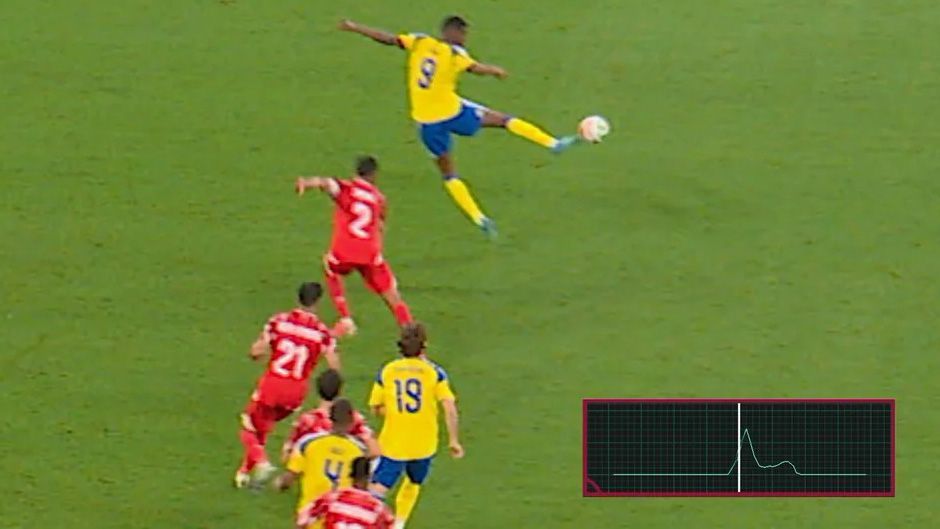
However, VAR overturned the decision after ruling there was a slight flick on the ball by his teammate Alexander Isak which played Svanberg onside. A decision they reached by using Adidas' Connected Ball Technology (which is similar to the "snickometer" device used in cricket to tell if a player has hit the ball with their bat.)
(Credit: SVT)
VAR review: The key focus on this review was centered around a potential touch by Isak before the ball reached Svanberg, as this would reset the play and determine if the goal was allowed.
To the naked eye, this was impossible to judge, and the on-field decision of offside looked a credible and correct one. However, VAR are able to use Adidas' ball tracking technology and the system identified the slightest of touches by Isak, which reset the phase, meaning the goal should stand. Read more
June 13: Switzerland vs. Qatar
Referee: Said Martínez
VAR: Guillermo Pacheco
Time: 14th minute
Incident: Check for offside on Switzerland's Remo Freuler before he was brought down by Qatar goalkeeper Mahmoud Abunada for a penalty, which was scored by Breel Embolo.
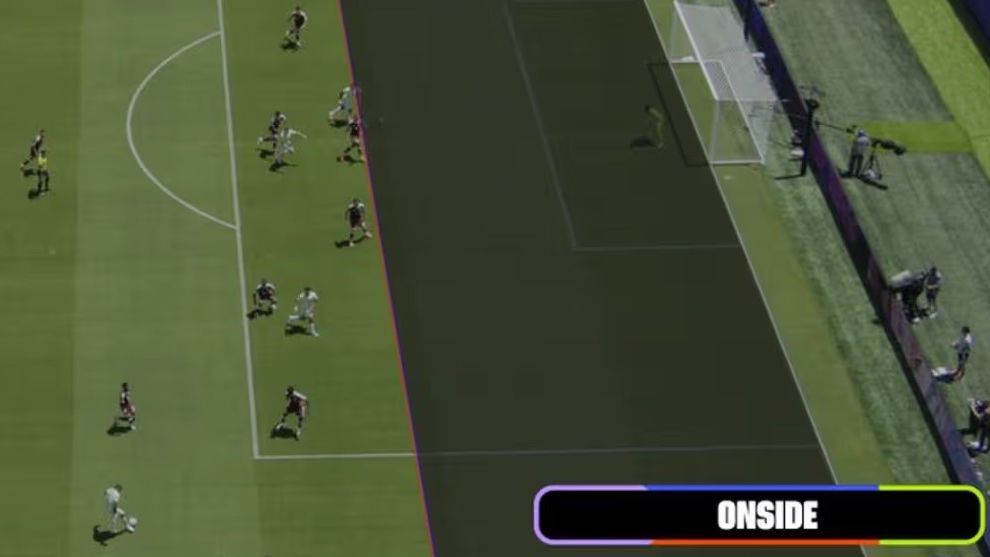
What happened: FIFA's new semi-automated offside system did not work in a key moment during Switzerland vs. Qatar.
Freuler looked offside before he was fouled for the penalty that was awarded to put Switzerland 1-0 up, but the VAR had to draw the offside lines to the players and on the pitch themselves.
Around 4½ hours after the incident happened, FIFA released the images, while it also said in a statement: "A brief technical outage prevented the onside animation graphic from being generated ahead of the penalty in the 14th minute.
"The issue was quickly resolved. The workflow of the VAR was not affected by this issue and followed the normal procedure in checking the onfield decision [of onside].
"The lines used by the VAR to check the position of the relevant players did not show the attacking player to be in an offside position in either of the two situations immediately before the penalty decision."
(Credit: FIFA)
VAR review: There were two checks: The first on Embolo in the buildup, then on Freuler before he was brought down by Qatar goalkeeper Abunada. Neither was deemed offside.
Verdict: Embarrassing for FIFA, and its new technology. We'll never know what the decision would have been if the semi-automated offside tech had been working. We have to trust the technology was working and applied as FIFA says, but it has once again created huge doubt in the minds of fans.
June 12: United States vs. Paraguay
Referee: Danny Makkelie
VAR: Carlos Del Cerro Grande
Time: 53rd minute
Incident: After originally giving USMNT defender Tim Ream a yellow card, the referee was called to the screen and reissued it to Paraguay's Miguel Almirón.
After a VAR check for mistaken identity, Miguel Almirón is shown a yellow card 🟨 pic.twitter.com/XeD17F7hnV
— FOX Sports (@FOXSports) June 13, 2026
What happened: Ream, the U.S. team captain, was initially given a yellow card for what appeared to be a careless trip on Paraguay attacker Almirón. However, after the incident was reviewed by VAR and the referee at the screen, it was clear that Ream made no contact with the attacker, and his yellow was rescinded. Almirón received the yellow card for simulation.
VAR review: One of FIFA's new laws allows VAR to intervene when a player is shown a yellow or red card, but the offense for which the card was shown was committed by another player of either team.
Verdict: When a player clearly deceives the referee, and as a result, an opposing player receives an unfair yellow card, that is a positive addition to the laws. The initial yellow to Ream was an understandable decision in real-time by the referee, but Almirón clearly tries to win a free kick by committing an act of simulation, and his delayed yellow card is justified. This was a good application of the new laws and will hopefully discourage players from diving in these situations.
June 11: Mexico vs. South Africa
Referee: Wilton Pereira Sampaio
VAR: Nicolás Gallo Barragán
Time: 49 minutes
Incident: Red card to South Africa's Sphephelo Sithole for denial of a goal-scoring opportunity (DOGSO).
What happened: South Africa were 1-0 down as the second half kicked off, and they were soon down to 10 players when Sithole was shown a red card for bringing down Mexico midfielder Brian Gutiérrez, who was through on goal. The VAR checked the decision and judged it to be correct.
Verdict: Sithole will go down in history as the first player to be shown a red card at this World Cup, and this was a relatively easy decision.
Mexico's Gutiérrez cut across the South Africa defender and was tripped in the process, causing him to go down. Gutiérrez had a clear opportunity to score with his next action, so the resulting red card was the correct decision.
South Africa is shown a red card and is down to 10 men! 🟥 pic.twitter.com/HnPqExqTRq
— FOX Sports (@FOXSports) June 11, 2026
Time: 84 minutes
Incident: Red card to South Africa's Themba Zwane for violent conduct for striking an opponent.
What happened: Zwane attempted to move past Mexico's Roberto Alvarado, but his hand caught Alvarado's face in the process. The referee did not initially issue a red card, but did so after a VAR review.
Verdict: I felt this was a harsh decision considering the red card was given for "violent conduct/an act of brutality," and I do not believe this was either.
When you strike an opponent and there is contact to the face, there is a danger that it could be judged as violent conduct, and you run the risk of receiving a red card. Given the amount of time the referee spent at the screen watching replays, though, I do not believe he was completely convinced this was a violent act.
But once at the screen, it would have been a very brave decision not to take the action he did, given the information fed to him by the VAR.
South Africa is down to 9 players after a second red card 🟥 pic.twitter.com/uS87sjfQlI
— FOX Sports (@FOXSports) June 11, 2026
Time: 90+2 minutes
Incident: Red card for Mexico defender César Montes for denial of a goal-scoring opportunity (DOGSO).
What happened: South Africa broke in numbers and had four players on three as Khuliso Mudau raced toward the box. Montes got across and clipped him just outside the box, and the referee was quick to show a red card. The VAR reviewed the decision and judged it to be correct.
Verdict: I was surprised by the on-field decision of a red card as I did not feel this was an obvious goal-scoring opportunity.
For this to completely meet the threshold of DOGSO, the referee has be sure that the attacker's next touch is going to be a shot on goal or his direction of play is directly in on goal. In my opinion, this situation did not completely meet the criteria required for a red card. The attacker's next action was more likely to be a cross to his teammate as opposed to a shot on goal, making this a possible goal-scoring opportunity and not an obvious one.
But I would not expect the VAR to interfere with this decision as it would not be judged as a "clear and obvious" error given the level of subjectivity around the attacker's next action, whether it be a shot or cross.
César Montes is sent off 🟥
— FOX Sports (@FOXSports) June 11, 2026
This is the first time 3 players have been shown a red card in a FIFA World Cup opening match pic.twitter.com/GCC20sv3gz